
When you specify an insulation inspection plug, the elastomer gets most of the attention because it makes the seal. But the metal hardware — the cap or flange, the locking ring, the handle, and the lanyard — is what holds the whole assembly together, takes the wear of repeated inspections, and faces the plant environment day after day. Get the metal right and the plug lasts the life of the asset. Get it wrong and you are replacing corroded, distorted, or fire-damaged hardware long before the seal ever wears out.
METALX inspection plugs are available with metal components in two materials: 304 stainless steel and aluminum. The handle, locking ring, and lanyard are supplied in the same material as the cap, so you choose one metal for the whole assembly. This article explains how the two compare and how to decide which is right for your application.
What the Metal Components Actually Do
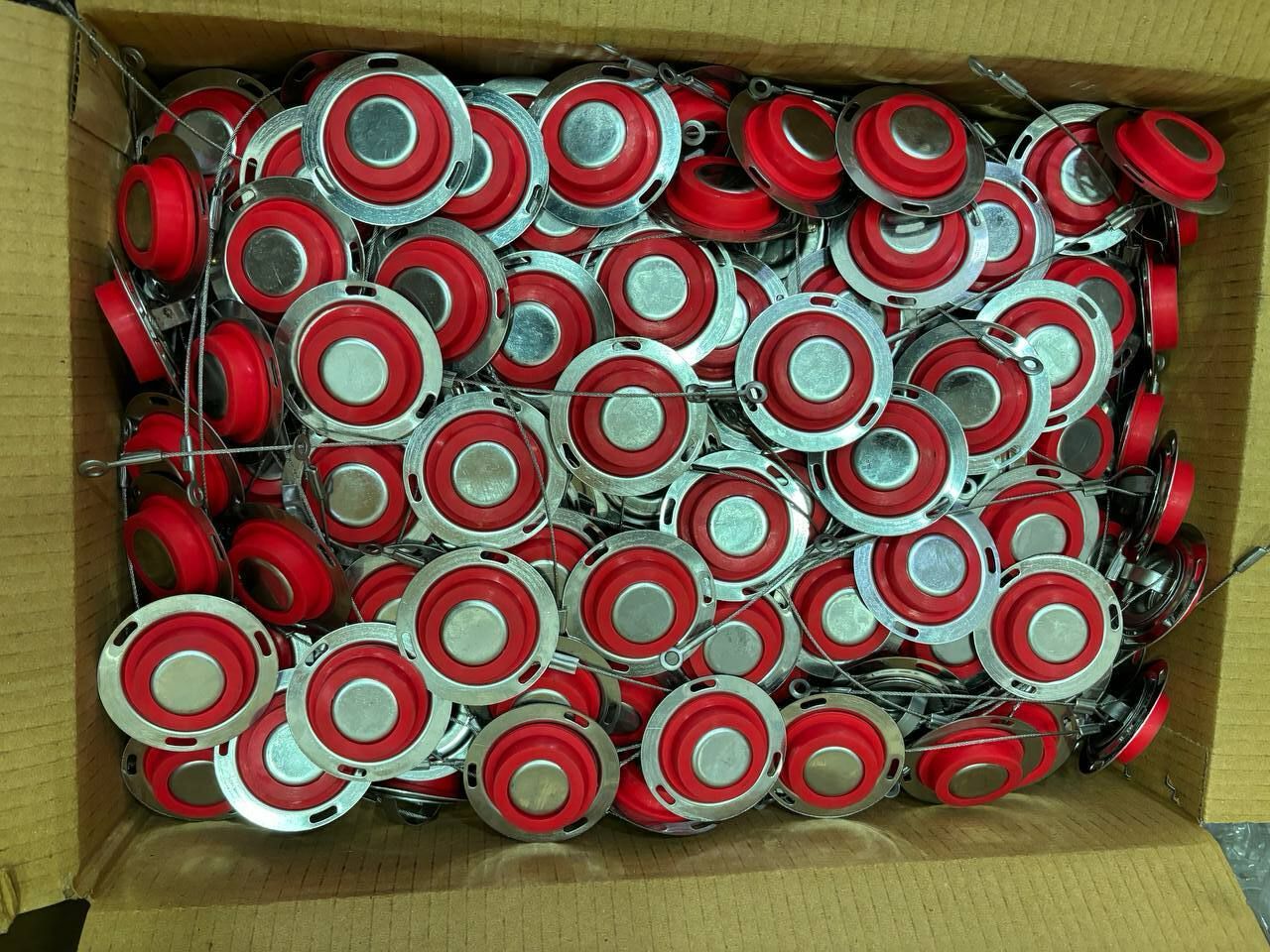
It helps to remember which parts are metal and why they matter. The cap (or, in the silicone design, the stainless steel flange with integrated holes) is the structural closure that seats the seal. The locking ring keeps the cap under proper sealing compression. The handle gives a positive grip for quick removal and refitting, and the stainless steel lanyard tethers the cap so it cannot be dropped or lost — especially important at height.
All of these parts are exposed to temperature, weather, chemicals, and physical handling. So the metal you choose has to suit the environment, not just the budget.
304 Stainless Steel: The Robust, High-Temperature Choice
304 is an austenitic stainless steel and the workhorse of industrial corrosion-resistant hardware. Our 304 components are produced to ASTM A240, with roughly 19% chromium and 8% nickel. That chromium content is the key: it forms a self-healing passive oxide layer that gives 304 its excellent resistance to corrosion across most plant atmospheres, water, steam, and a wide range of chemicals.
Its other major advantage is heat. Stainless steel keeps its strength at elevated temperatures and resists oxidation well past 800 °C, with a melting point above 1,400 °C. That makes it the natural partner for high-temperature lines — and it is why the silicone plug design, rated for service line temperatures up to 600 °C, uses a 304 stainless steel flange.
304 is also tough and durable. It resists denting, scratching, and the general knocks of repeated inspection work, and it stays ductile even at very low temperatures. The trade-offs are that it is heavier — roughly three times the weight of aluminum for the same part — and it costs more. In severe chloride environments (heavy coastal or marine exposure), chloride pitting is worth discussing during material selection, but for the large majority of refinery, power, and process applications, 304 performs excellently.
Best suited for: high-temperature lines, corrosive or chemically aggressive environments, fire-critical installations, and anywhere maximum durability and service life are the priority.
Aluminum: The Lightweight, Cost-Effective Choice
Aluminum brings a very different set of strengths. Its standout property is weight — at roughly a third the density of stainless steel, aluminum hardware is dramatically lighter. On large installations, on elevated or hard-to-reach piping, or where you are fitting plugs in high volume, that weight saving adds up to easier handling, faster installation, and less load on the structure.
Aluminum also forms its own protective oxide layer, giving good resistance to ordinary atmospheric corrosion, and it is generally lower in cost. For insulated equipment running at moderate temperatures in non-aggressive environments, an aluminum plug does the job well at an attractive price.
Its limitations follow directly from the material. Aluminum loses strength rapidly above roughly 200 °C and melts at about 660 °C, so it is not suited to high-temperature service or fire-critical locations. It is softer than stainless and therefore more prone to denting and wear from heavy handling. And it can be attacked by strong acids and alkalis and by high-chloride conditions, so it is not the choice for aggressive chemical exposure.
Best suited for: lower-temperature lines, mild atmospheric environments, weight-sensitive or elevated installations, and high-volume projects where cost and ease of handling matter most.
Side-by-Side Comparison
|
Property |
304 Stainless Steel |
Aluminum |
| Corrosion resistance | Excellent across most environments and chemicals | Good in mild atmospheric conditions; poor with strong acids/alkalis |
| High-temperature performance | Excellent — oxidation resistant past 800 °C | Limited — strength falls off above ~200 °C |
| Strength & durability | High; resists denting and wear | Lower; softer and easier to dent |
| Weight | Heavier (~3× aluminum) | Very light (~⅓ of stainless) |
| Fire resistance | Excellent (melts above 1,400 °C) | Poor (melts at ~660 °C) |
| Relative cost | Higher | Lower |
| Best application | High temp, corrosive, fire-critical, long life | Moderate temp, mild environments, weight-sensitive, budget |
The Key Decision Factors
Choosing between the two usually comes down to four questions:
Temperature. What is the line temperature, and how much heat reaches the plug? For hot service and anywhere near significant radiant heat, 304 stainless steel is the safe, durable choice. For ambient or moderate-temperature lines, aluminum is perfectly adequate.
Environment. Is the plug exposed to aggressive chemicals, heavy washdown, or coastal/marine air? Corrosive conditions point firmly to stainless steel. Mild, sheltered, indoor, or general atmospheric exposure is well within aluminum's comfort zone.
Weight and access. Are you fitting plugs at height, on large vessels, or in large numbers? Aluminum's light weight makes handling and installation faster and easier, and reduces structural load.
Cost and fire safety. Aluminum wins on upfront cost, but in fire-critical areas — common in refineries and petrochemical plants — stainless steel's much higher melting point makes it the responsible choice.
Don't Forget Galvanic Compatibility
One factor that is easy to overlook: dissimilar metals in contact, in the presence of moisture, can drive galvanic corrosion. If your cladding is stainless steel, a stainless plug avoids creating a galvanic couple; if the cladding is aluminum, aluminum hardware matches it. As a general rule, matching the plug's metal to the surrounding cladding material is good practice and helps both the plug and the cladding last longer.
So, Which Is Right for Your Application?
If your priority is maximum corrosion resistance, high-temperature capability, fire safety, and the longest service life in demanding conditions, choose 304 stainless steel. It is the premium, fit-and-forget option for refineries, chemical plants, and high-temperature or harsh-environment piping.
If your priority is light weight, easy handling, and lower cost on moderate-temperature lines in non-aggressive environments — particularly across large or elevated installations — choose aluminum. It delivers reliable performance where the conditions are within its range.
For most plants, the honest answer is "both, depending on the line." High-temperature and corrosive services get stainless; cooler, milder, weight-sensitive services get aluminum.
The METALX Approach
Because METALX inspection plugs are offered with 304 stainless steel or aluminum hardware — cap, locking ring, handle, and lanyard all matched in the same material — you can specify the right metal for each application rather than compromising on one across the board. Pair that with your choice of silicone or EPDM seal, and you can build a plug that fits your exact temperature, environment, weight, and budget requirements.
*Not sure which metal suits your line? Share your operating temperature, environment, and cladding material with the METALX team, and we will recommend the right configuration.*