
In any refinery, power plant, or process facility, kilometres of pipework run hidden beneath layers of insulation and metal cladding. That insulation keeps heat where it belongs, protects personnel, and saves energy — but it also hides one of the most expensive and dangerous problems in industrial maintenance: Corrosion Under Insulation (CUI).
For decades, the only way to check the condition of the pipe wall underneath was to strip the cladding, tear out the insulation, inspect, and then rebuild everything from scratch. It is slow, it is costly, and — most frustrating of all — the replacement insulation is often where the *next* round of corrosion quietly begins.
There is a far better way. With a properly installed insulation inspection plug, you can open a clean, sealed window straight through the cladding and insulation, inspect the pipe surface, and close it again in seconds — no cutting, no rebuilding, and no recurring damage. This article explains exactly how it works, and why a reusable inspection plug should be part of every serious CUI inspection programme.
Why Corrosion Under Insulation Is Such a Costly Problem
CUI is corrosion of the pipe or vessel wall that occurs *because* of the insulation around it, not in spite of it. Insulation is porous, and over time water finds its way in — from rain, washdown, steam, condensation, or a failed weather barrier. Once moisture is trapped against a warm metal surface and held there by the insulation, you have the perfect conditions for aggressive corrosion.
The reason CUI is so dangerous is that it is invisible. The cladding looks perfectly intact from the outside while the pipe wall behind it is steadily wasting away. Failures are often discovered only when a line leaks, fails a pressure test, or ruptures — by which point the cost of repair, lost production, and the safety risk are enormous.
CUI is most aggressive in the temperature band where water can collect but does not immediately flash off — typically around 50 °C to 175 °C (roughly 120 °F to 350 °F) for carbon steel. This covers a huge proportion of process and utility piping, which is exactly why CUI is one of the most-studied integrity threats in the oil, gas, petrochemical, and power industries.
The takeaway is simple: insulated pipe needs to be inspected, and it needs to be inspected *regularly*. The only real question is how you get to the metal underneath without destroying the insulation system every time.
The Old Way: Strip, Inspect, Rebuild
The traditional approach to inspecting insulated piping is brute force. To examine even a small section of pipe, a crew has to:
1. Remove the metal cladding (lagging), often damaging it in the process.
2. Cut out and discard the insulation.
3. Inspect or perform NDT (non-destructive testing) on the exposed metal.
4. Re-insulate the line and fit new cladding.
Every one of those steps costs time, labour, and material — and the line frequently has to be taken out of service while the work is done. Worse, the rebuilt insulation rarely seals as well as the factory-installed original. Gaps, poorly lapped joints, and damaged vapour barriers become fresh entry points for water, which means the very act of inspecting for CUI can *accelerate* the next occurrence of CUI.
In short, the conventional method is expensive, disruptive, and partly self-defeating. It is the problem inspection plugs were invented to solve.
The Solution: Insulation Inspection Plugs
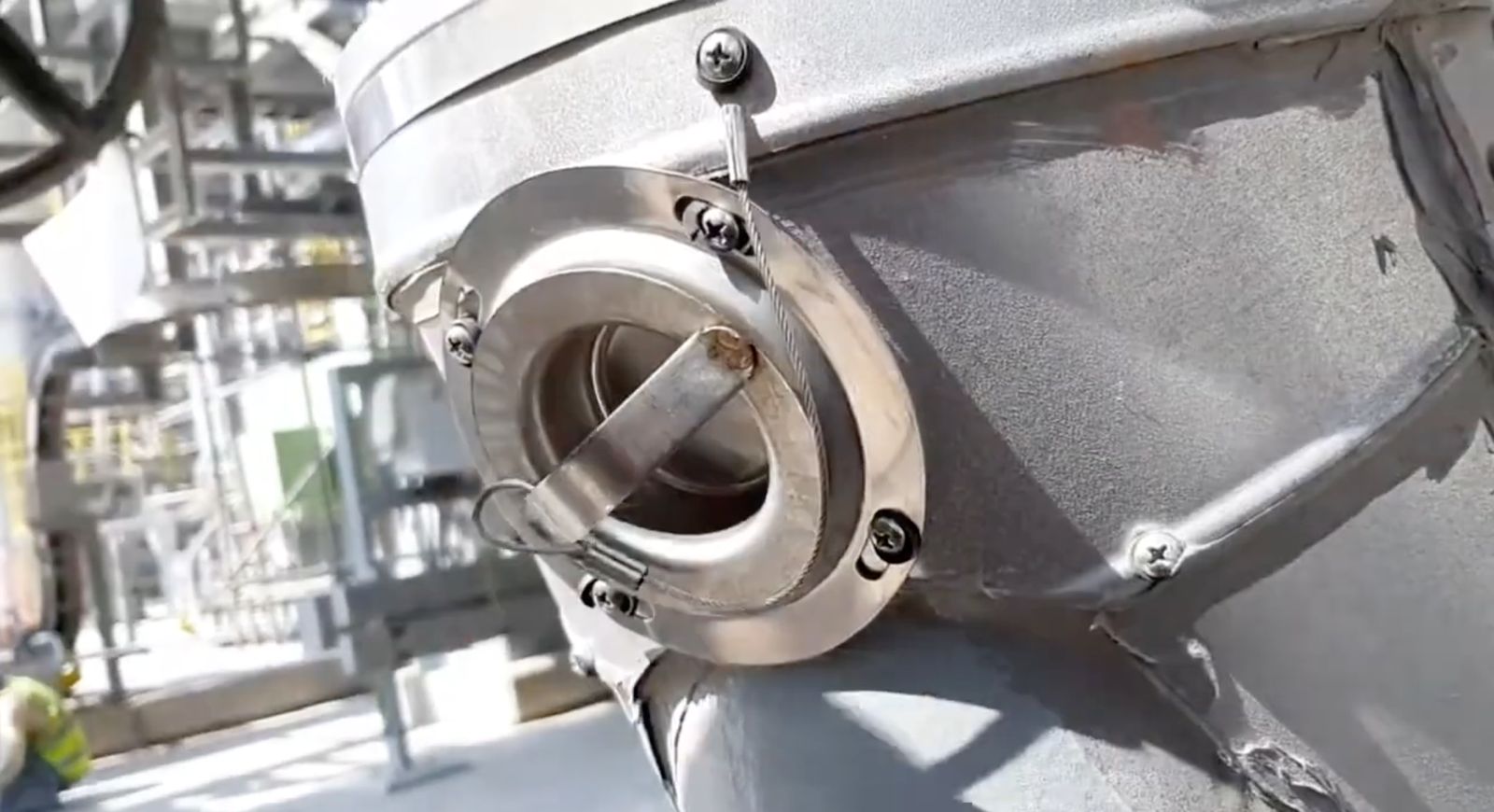
An insulation inspection plug is a permanent, sealed access port built into the insulation system. It gives you a small, ready-made opening — closed by a removable plug or cap — that lets you reach the pipe surface whenever you need to, then reseal it instantly.
Instead of a destructive, one-time excavation, you create a reusable inspection point. Open it, look (or insert a probe), close it. The insulation and cladding stay completely intact, and the plug restores the airtight, watertight seal every single time.

*A METALX silicone inspection plug installed in its 304 stainless steel flange — a permanent, sealed access window straight through the cladding.*
Our inspection plugs are engineered specifically for this job. A stainless steel flange is fitted flush into the cladding, and a sealing plug closes the opening. The result is a discreet, weatherproof port that sits permanently in the insulation, ready for inspection on demand. No special tools, O-rings, transition gaskets, contoured flanges, or improvised "goof" fittings are required to make it work.
How to Inspect Pipe Insulation Using an Inspection Plug
Once the plug is installed, the inspection routine becomes remarkably simple. A single technician can do it in seconds, often without taking the line out of service:
1. Locate the plug. Inspection plugs are positioned at the points most likely to develop CUI (see the best-practice locations further down).
2. Release and remove the plug or cap. The sealing plug lifts straight out, or the metal cap is unclipped using its locking ring and handle. A stainless steel lanyard keeps the cap tethered so it cannot be dropped or lost during work at height.
3. Inspect the pipe surface. Carry out a visual check, or insert your chosen NDT equipment — ultrasonic thickness gauge, borescope, pit gauge, or thermography probe — directly through the opening to assess the metal.
4. Reseal the port. Push the silicone plug back into the flange (or refit the metal cap and locking ring). The seal is restored immediately, and the insulation system is once again fully closed and weatherproof.

*With the cap released, the port opens cleanly for visual inspection or NDT — the stainless steel lanyard keeps the cap secured at all times.*
Because the plug is designed to be opened and closed repeatedly, the same access point can serve a facility for years. Inspection that once took a crew half a day now takes one person a few minutes — and the insulation is never compromised.
Inside the METALX Inspection Plug
METALX inspection plugs are built for the demanding conditions of refineries, power plants, and chemical facilities. They are available in two complementary designs so you can match the plug to your operating environment.
The silicone plug version uses an industrial-grade red silicone plug seated in a 304 stainless steel flange with integrated holes. The silicone forms a permanent airtight and watertight seal, and its convex bottom maintains long-term sealing pressure against the side wall of the flange — compensating for any shrinkage as the material ages. It handles a wide service range of −50 °C to 600 °C (−58 °F to 932 °F) and is offered in 1", 2", 3", 4", and 5" sizes.
The elastomer (EPDM) sleeve version pairs a high-quality EPDM sleeve with a metal cap in 304 stainless steel or aluminium, supplied with or without a handle, lanyard, and locking ring. It needs no special tools and is easy to remove and reuse. EPDM sleeves are colour-coded — grey, red, and blue — for different temperature bands, and the range covers 1.5", 2.0", 2.5", 3.0/3.5", and 5" (38, 50, 64, 76, and 127 mm) sizes. The 304 stainless steel hardware is manufactured to ASTM A240, giving excellent chemical, ozone, water, weathering, UV, and fire resistance.
Both designs install into the insulation as a permanent fixture, both reseal completely after every inspection, and both eliminate the need to remove cladding ever again at that location.
Key Benefits at a Glance
Choosing an inspection-plug strategy over destructive removal pays off on almost every measure that matters in a maintenance budget:
- No cladding removal — inspect the pipe without cutting, stripping, or rebuilding the insulation system.
- Reusable — open and close the same port hundreds of times over the asset's life.
- Faster inspections — minutes per point instead of hours, often without a shutdown.
- Lower lifetime cost — dramatic savings in labour, scaffolding, and replacement insulation.
- A reliable, lasting seal — airtight and watertight performance that protects against the very moisture ingress that causes CUI.
- Built to last — silicone or EPDM sealing elements with 304 stainless steel hardware for long service in harsh environments.
- Safe at height — tethered caps and lanyards prevent dropped objects.
Where to Install Inspection Plugs
To get the most value from an inspection-plug programme, place ports where CUI is most likely to take hold and where moisture tends to collect. Good candidate locations include low points and dead legs, pipe penetrations and supports, areas around valves and flanges, locations near damaged or previously repaired cladding, and any spot where the weather barrier is broken or where water can pool. Concentrating plugs at these high-risk positions turns a once-overwhelming inspection task into a manageable, repeatable routine.
Inspect Smarter, Not Harder
Corrosion under insulation will not announce itself — but it does not have to remain hidden until it fails. By building permanent, reusable inspection ports into your insulation system, you replace a destructive, expensive, half-day job with a quick, repeatable check that keeps the cladding intact and the seal sound.
METALX silicone and EPDM inspection plugs give you that capability across the full range of pipe sizes, temperatures, and chemical environments found in refineries, power plants, vessels, and tanks. Inspect when you need to, seal it back up in seconds, and protect your assets — without ever removing the cladding.
To discuss the right inspection plug for your application, get in touch with the METALX team for sizing, specifications, and availability.