
When people choose an insulation inspection plug, they tend to focus on the size, the flange, or the metal cap. But the single component that decides whether the plug actually does its job — keeping water out and the seal tight for years — is the elastomer. It is the part that has to flex, compress, reseal, and survive everything the environment throws at it, inspection after inspection.
Get the elastomer wrong and the consequences are exactly what the plug is supposed to prevent. A seal that hardens, cracks, or loses compression lets moisture in, and trapped moisture against a warm pipe is the recipe for Corrosion Under Insulation (CUI). So the question "silicone, EPDM, or something else?" is not a detail. It is the most important specification decision you will make.
This guide breaks down how the common sealing elastomers actually perform in insulation-plug service, and gives you a simple way to pick the right one.
What the Seal in an Insulation Plug Actually Has to Survive
Before comparing materials, it helps to be clear about the job. An insulation inspection plug seals a permanent access port in the cladding, and the elastomer in that port has to cope with a punishing combination of conditions:
- A wide temperature range, including thermal cycling as the line heats up and cools down.
- Constant outdoor exposure to sunlight (UV), ozone, and weathering — cladding lives outside.
- Water in every form — rain, washdown, condensation, and steam.
- Chemical contact from process spills, fumes, and cleaning agents.
- Repeated compression and recovery, because the plug is opened and resealed many times over its life, while resisting "compression set" (permanent flattening) as it ages.
An elastomer that is brilliant in one of these areas can be useless in another. That is why material choice depends on the environment, not on which rubber happens to be cheapest.
Silicone (VMQ): The High-Temperature, Long-Life Champion
Silicone is the standout performer when temperature and longevity matter most. It stays flexible across an exceptionally wide span — roughly −60 °C to +230 °C for standard grades, with high-temperature formulations reaching higher still — and it does not become brittle in the cold or gummy in the heat the way many rubbers do.
Its real superpower, though, is ageing. Silicone has outstanding resistance to UV, ozone, and weathering, so it does not crack or chalk after years in the sun. It also resists compression set extremely well, meaning it keeps pushing back against the sealing surface long after installation. That is precisely the property you want in a permanent inspection plug that may sit untouched for months between inspections.
The trade-offs: silicone has lower tear and abrasion strength than tougher rubbers, and it is not the right choice where the seal will be bathed in petroleum oils, fuels, or certain solvents. It also sits at the higher end on price.
Best suited for: high-temperature lines, long-term outdoor service, and any application where you want the seal to last the life of the asset.
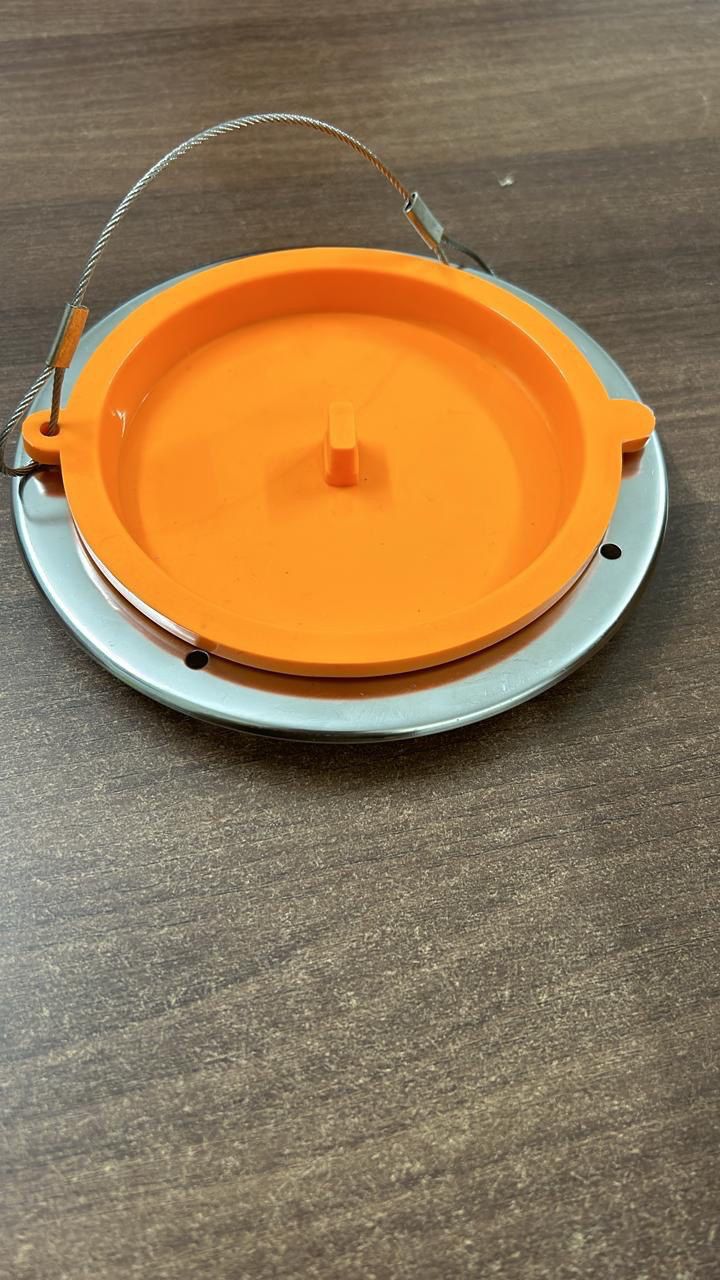
EPDM: The All-Round Value Choice for Industrial Service
EPDM is the workhorse elastomer for general insulation-plug duty, and for good reason. It offers excellent — often outstanding — resistance to weathering, ozone, and UV, which makes it ideal for cladding that lives permanently outdoors. It is also superb with water and steam and with a wide range of polar chemicals, acids, and alkalis.
The figures behind it are solid. The EPDM sleeves used in our plugs are tested to recognised ASTM methods and deliver around 525 % elongation at break, roughly 1,400 psi (98 kg/cm²) tensile strength, a 47 Shore A hardness, and a compression set near 35 % — a well-balanced mechanical profile that flexes to seal yet holds its shape under repeated use. Across the colour-coded grades, chemical, ozone, water, weathering, UV, and fire resistance all rate from excellent to outstanding.
EPDM's one notable weakness is petroleum: it should not be used in continuous contact with mineral oils, fuels, or hydrocarbons, which cause it to swell and degrade. For the vast majority of insulated piping in refineries, power plants, and process facilities — where the external exposure is weather, water, steam, and process chemicals rather than oil immersion — that limitation rarely matters.
Best suited for: general industrial and outdoor service, water/steam and chemical exposure, and applications where you want excellent performance at the best value.
The Other Elastomers — and Why They Are Usually the Wrong Pick
It is worth understanding the alternatives, if only to see why silicone and EPDM dominate this application.
Nitrile (NBR / Buna-N) is the go-to oil-resistant rubber and is excellent against fuels and hydrocarbons. But it has poor ozone, UV, and weathering resistance and a modest temperature ceiling (about −30 °C to +120 °C). On weather-exposed cladding it cracks and perishes quickly, which makes it a poor fit for an outdoor inspection plug.
Neoprene (CR) is a reasonable all-rounder with decent weathering and moderate oil resistance, plus useful flame resistance. It is a "jack of all trades, master of none," with a limited temperature range (about −40 °C to +120 °C) that leaves it behind silicone and EPDM for demanding insulation service.
Viton (FKM / fluoroelastomer) is the premium specialist — outstanding chemical and high-temperature resistance (to around +200 °C) and excellent for aggressive media. But it is expensive, can struggle with hot water and steam in standard grades, and is overkill unless you are sealing against genuinely aggressive chemicals.
Natural rubber and SBR are inexpensive and mechanically strong, but their poor resistance to heat, ozone, UV, and chemicals rules them out for serious industrial insulation plugs.
Side-by-Side Comparison
|
Property |
Silicone (VMQ) |
EPDM |
Nitrile (NBR) |
Neoprene (CR) |
Viton (FKM) |
| Typical temperature range | −60 to +230 °C (high-temp grades higher) | −50 to +150 °C | −30 to +120 °C | −40 to +120 °C | −20 to +205 °C |
| UV / ozone / weathering | Excellent | Excellent | Poor | Good | Excellent |
| Water / steam resistance | Good | Excellent | Good | Good | Fair |
| Oil / fuel / hydrocarbon | Poor | Poor | Excellent | Moderate | Excellent |
| General chemical resistance | Fair–good | Excellent (polar) | Good (oils) | Moderate | Outstanding |
| Tear / abrasion strength | Lower | Good | Good | Good | Good |
| Resistance to ageing / compression set | Excellent | Good | Good | Good | Excellent |
| Relative cost | Higher | Low | Low | Moderate | Very high |
| Best application | Highest temps, longest life | General industrial, best value | Oily environments | Balanced general use | Aggressive chemical service |
A Note on Temperature: Why the Numbers on a Plug Can Look So High
You may notice that an insulation plug is sometimes specified for a far higher service temperature than the raw rubber's continuous rating suggests. That is not a contradiction. An inspection plug seals at the *outer, cold-face surface* of the insulation, not directly against the hot process pipe. The insulation itself does its job, so the elastomer runs much cooler than the line behind it. This is why a silicone-sealed plug can be specified for line temperatures up to 600 °C (932 °F) while the silicone itself stays comfortably within its working range.
Which One Should You Choose?
For most insulated piping, the decision comes down to two questions:
If your priority is the widest temperature range, the highest line temperatures, and the longest possible seal life in the sun and weather, choose silicone. It is the premium, set-and-forget option.
If you want excellent weathering, water, steam, and chemical resistance at outstanding value for general industrial service, choose EPDM. It covers the large majority of refinery, power-plant, and process applications beautifully.
Only reach for a specialist elastomer such as Viton or nitrile when you have a specific, identified exposure — genuinely aggressive chemicals or constant oil contact — that the mainstream materials cannot handle. For weather-exposed cladding, the oil-resistant-but-weather-poor rubbers usually create more problems than they solve.
The METALX Approach
Rather than forcing one material onto every job, METALX inspection plugs are available in both industrial-grade silicone and high-quality EPDM, paired with 304 stainless steel or aluminium hardware. That means you can match the sealing elastomer to your actual operating environment — high temperature and longevity with silicone, or all-round chemical and weathering performance with EPDM — instead of compromising.
The right plug seals reliably, reseals after every inspection, and keeps moisture out for years. Choosing the correct elastomer is how you get there.
*Not sure which material suits your line? Get in touch with the METALX team with your temperature, chemical exposure, and pipe-size details, and we will recommend the right plug for the job.*